

Powering Digital Out of Home
View our Digital Out of Home installations in our
Bringing Bus Shelters to Life
Bus shelters were once boringly functional, built solely by cities to keep passengers dry. Then in 1969, two billboard advertising companies joined forces to form a company called Adshel and began supplying bus shelters to cities for free – with the right to display advertising on them.
In the early 1980’s, bus shelter ads got their big break when Adshel launched a campaign for a fictional product and promoted it solely through the bus shelters.
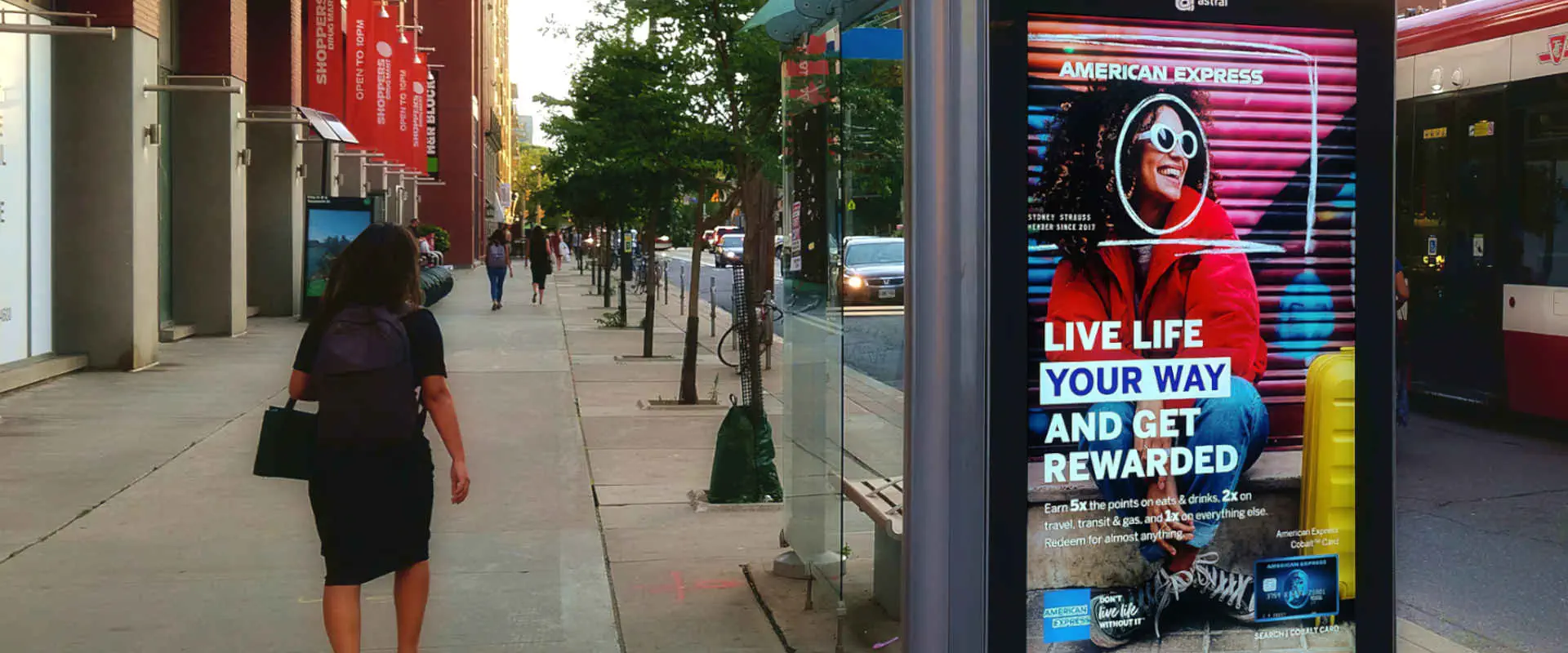
Market research revealed an impressive awareness of this product among the general public, proving they were on to something. Municipalities began to partner with media companies and upgrade their street furniture.
Today, bus shelters and advertising contracts work in much the same way they started. With contract terms extending out as far as 10 or 15 years, media companies turn to long-life BoldVu® displays that seamlessly integrate into their bus shelter structures.
Street Kiosks
Digital, interactive kiosks, also known as totems and digital bulletins, are appearing on sidewalks and in public venues. Cities and venues use them to modernize infrastructure, streamline services, and communicate more clearly with the public. These kiosks already deliver locally relevant information, transit alerts, and wayfinding. Now, the next generation is ready for a larger role. They can support smart city infrastructure that delivers both civic benefit and commercial value.
BoldVu® displays make public-space deployments easier. Each display can house, power, and cool IoT devices inside its thermally controlled chassis. That sealed design helps simplify the rollout of critical connectivity and edge computing resources in public spaces. That capability is already deployed, not theoretical — The Farmers Market installations are operating in public spaces today.
Urban Panels
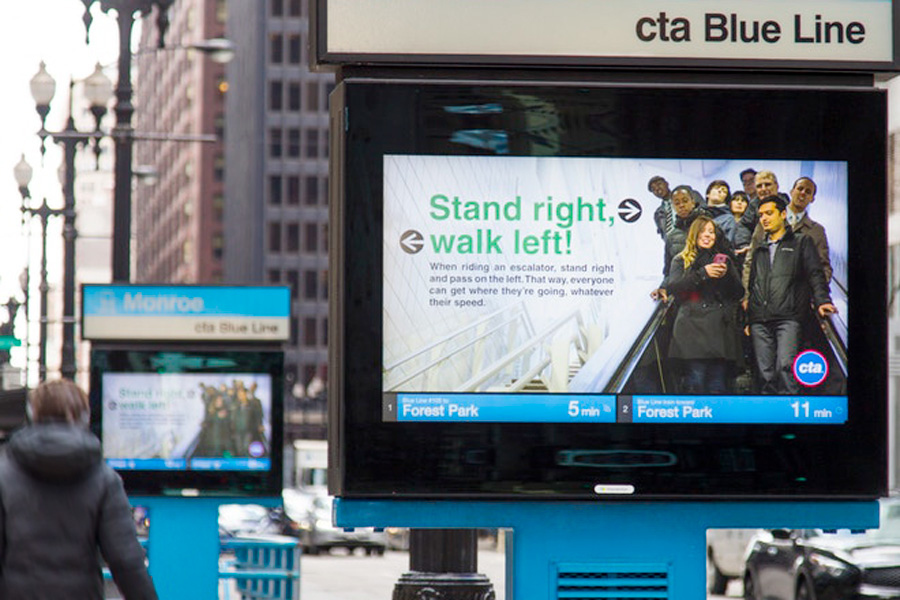
Digital urban panels have long been a staple in the commuter advertising space as they offer large volumes of hyper-local, high quality impressions. Out of home media companies have taken digital displays to cities with heavy rail systems including Chicago and Boston, as both a way to further monetize the real-estate and to offer critical public messaging capabilities.
Because of their durability, performance, and longevity, BoldVu® displays are the backbone for most of the digital urban panel networks across the US today.
Transit Screens
Transit screens in rail stations serve as Passenger Information Displays (PIDs) in direct line of sight of commuters, including those waiting for departure information where dwell time is the highest. Digital screen networks provide up-to-the-minute arrival and departure information, service alerts and emergency messaging funded by media advertising.
BoldVu® displays, with their unsurpassed performance, deploy ready for DSP and SSP ad servers, in rail stations across the US and around the world.
Emerging Media
As more and more traditional OOH inventory is converted to digital, new properties are beginning to join the mix. Beyond bus shelters, street kiosks, video urban panels, and transit screens, we’re seeing the development of digital dioramas, digital news stands, vehicle charging stations, light poles, and lifestyle centers – all programmatic & DOOH ad-tech ready. Every newly converted medium brings fresh eyes and new targeting opportunities.
MRI continues to develop display technology to drive DOOH forward with applications for new and emerging properties.
Interested in how BoldVu® can help your property?