

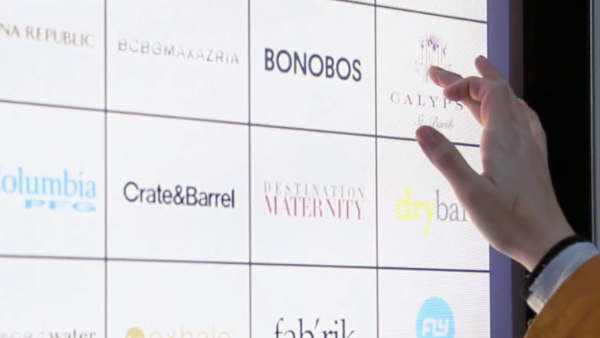
Manufacturing Resources International (MRI), the team behind BoldVu® outdoor LCD technology, just released the world’s first All-Glass Touch Panel. Leading out-of-home media companies use BoldVu® for street furniture and transit screens. This technology delivers a truly tablet-like touch experience, with as fast as 10ms response time.
This projected capacitive (PCAP) touch panel sets a new benchmark for optical performance. It delivers high transmissivity with extremely low diffuse and specular reflection. In real-world terms, the touch layer stays nearly invisible. It lets the image shine through without interference.
“This is truly a huge leap forward for touch technology in outdoor displays,” says Bill Dunn, President and CEO of MRI. “With increasing market momentum around the digitization of street furniture and deployment of smart city kiosks, this monumental breakthrough in visual performance of touch-enabled displays could not have come at a better time.”
Existing PCAP Sensors
The All-Glass Touch Panel marks a major leap over typical PCAP panels. Most interactive outdoor displays still rely on older approaches. Traditional micro-mesh PCAP panels block more light, even behind clear glass. That forces the display to use more backlight power to hit the same brightness.
PET-based PCAP panels transmit more light than micro-mesh designs. They still push you to increase backlight power to maintain brightness. Plastic-based panels also suffer outdoors over time. Sun and temperature swings can warp them and reduce responsiveness.
Optical Shortcomings
Micro-mesh and PET-based wire PCAP panels often exhibit a strong specular reflection or metallic “glint”, especially when viewed off-angle. Next time you see an outdoor kiosk, look closely and you can see the wires running through the screen.
Another issue with other wire-mesh and PET-based PCAP sensors is the amount of diffuse reflection they exhibit. Diffuse reflection refers to the way a ray of light is scattered at many angles. The higher the diffuse reflection, the more the contrast and color gamut drop through the floor. High diffuse reflection is particularly evident when viewing dark content – black isn’t actually black, it’s grey. Inability to produce high contrast results in dull and barely visible picture.
Micro-mesh and PET-based touch sensors also suffer from highly noticeable birefringence when viewed through polarized sunglasses. You’ve likely noticed this at gas pumps. Odd colors and patterns appear on the display. Using touch technology that blacks out and distorts a human-sized, outdoor display when viewed with sunglasses is hardly ideal. That visual effect hurts the viewing experience and weakens ad impact. It also makes brand presentation harder to control.
The All-Glass Touch Panel
MRI’s new touch technology, unlike the others discussed thus far, uses no plastics or wires, and is instead comprised of a multi-layered, laminated stack of glass panes. Bill Dunn comments, “The visual difference between this and other PCAP screens is astounding, colors are so much more vibrant, and blacks are truly black. And there are no wires!” There is also no birefringence when viewed with polarized sunglasses and as promised, the screens feel very responsive to touch interaction.
MRI’s All-Glass Touch Panel is exclusively shipping on BoldVu® 55-inch outdoor displays, with 75-inch and 86-inch versions to be made available in early 2018. The price premium for the All-Glass Touch Panel on BoldVu® displays will be very comparable with other PCAP touch panels in use today.